I love yoga.
It has been a part of my life for many years and has helped me in ways I can hardly put into words. For me, yoga does more than just regulate; it connects. It brings clarity. It puts me in touch—with my body, my emotions, and my inner movements.
That is precisely why I view some of what is practiced as yoga in the West with a critical eye.
It is not yoga itself that is the problem, but rather the way we frequently reduce and standardize it, fitting it into familiar frameworks of performance-based logic.
When practice turns into performance
In the West, yoga is usually practiced with a strong focus on performance. From the very beginning, the emphasis has been primarily on physical form—progress, intensity, and visible development. The handstand as a goal. Greater flexibility. More strength. Greater depth in the pose.
A challenge is not inherently negative. Physical strength and agility are valuable.
Things become problematic when yoga imperceptibly slips into the same logic that governs many other areas of life: higher, further, better.
Many people come to yoga because they are already under pressure to perform in their daily lives. If yoga then also becomes a place where one has to achieve something, a silent repetition of that very pattern arises.
The question shifts:
No longer “What do I perceive?”
But rather “How far do I get?”
© Jana Rodenbusch
When yoga is reduced to asanas
Another aspect of this development is the strong focus on body postures.
In classical yoga philosophy—such as in Patanjali’s eight-fold path—asanas are just one part of the eight dimensions of the practice. These include, among other things, ethical foundations, self-reflection, breathwork, concentration, and meditation.
In the Western context, however, yoga has often been reduced almost exclusively to the physical level. This shifts the focus: from internal alignment to external form.
When the focus is on outward form, comparison arises. And with comparison comes judgment.
This does not mean that asanas are unimportant. But when they are separated from the philosophical and internal context, the practice fundamentally changes.
“Yoga for all” – and the reality of individual bodies
Yoga is often described as a practice for everyone. And fundamentally, I share this desire for accessibility.
What I view critically, however, is the implicit assumption that an attitude looks the same for everyone—or should feel the same.
Bodies are built differently.
Hip joints, shoulder structures, spinal shapes, and tension patterns—all of these vary significantly. What comes easily to one person may be challenging, uncomfortable, or even unsuitable for another.
When all participants in a large class are expected to adopt the same form, individuality is inevitably limited. Truly tailoring the practice to a person’s anatomy, prior experience, or sensitive nervous system requires at least a minimum level of observation and assessment of their background.
That is hardly possible in large studio courses. And that is not problematic in itself—provided there is a clear statement of what is being offered.
It is perfectly legitimate for a class to focus primarily on training strength, flexibility, and coordination.
Problems only arise when this type of practice is portrayed as universally healing or deeply transformative—regardless of the individual or the context.
Yoga is not a standardized form.
It is an individual practice.
When effects are specified
Another point that gives me pause for thought is how inner experiences are handled in the classroom.
Sentences like:
“Feel the spaciousness.”
“In Warrior II, you feel your self-confidence.”
“This pose opens your heart.”
Such impulses are often well-intentioned. And, of course, certain attitudes can foster certain qualities.
However, inner experiences are individual.
What happens when someone, in this posture, feels not spaciousness but constriction? Not strength but uncertainty? Or simply nothing at all?
That can easily create a subtle pressure. The feeling of not doing something right. Of not going deep enough. Of not being “receptive” enough.
We can say:
A posture can provide stability.
It can foster a sense of spaciousness.
It can make strength tangible.
But we shouldn’t dictate what someone has to feel.
Yoga becomes a genuine practice when subjective experience is respected rather than corrected.
Mixing of systems – and the question of clarity
In recent years, we have also observed an increasing blending of yoga with other forms of training—such as Pilates or functional strength training.
Movement is important. Strength is important. Different methods can complement each other.
Yet yoga is more than just a sequence of exercises. When it is viewed solely as a workout while remaining imbued with spiritual promises, a contradictory blend of performance orientation and self-optimization emerges—all under the guise of mindfulness.
This ambivalence can be unsettling, especially for people who are sensitive to pressure or live with psychological strain.
How I understand yoga in today’s context
All these points do not mean that yoga is problematic.
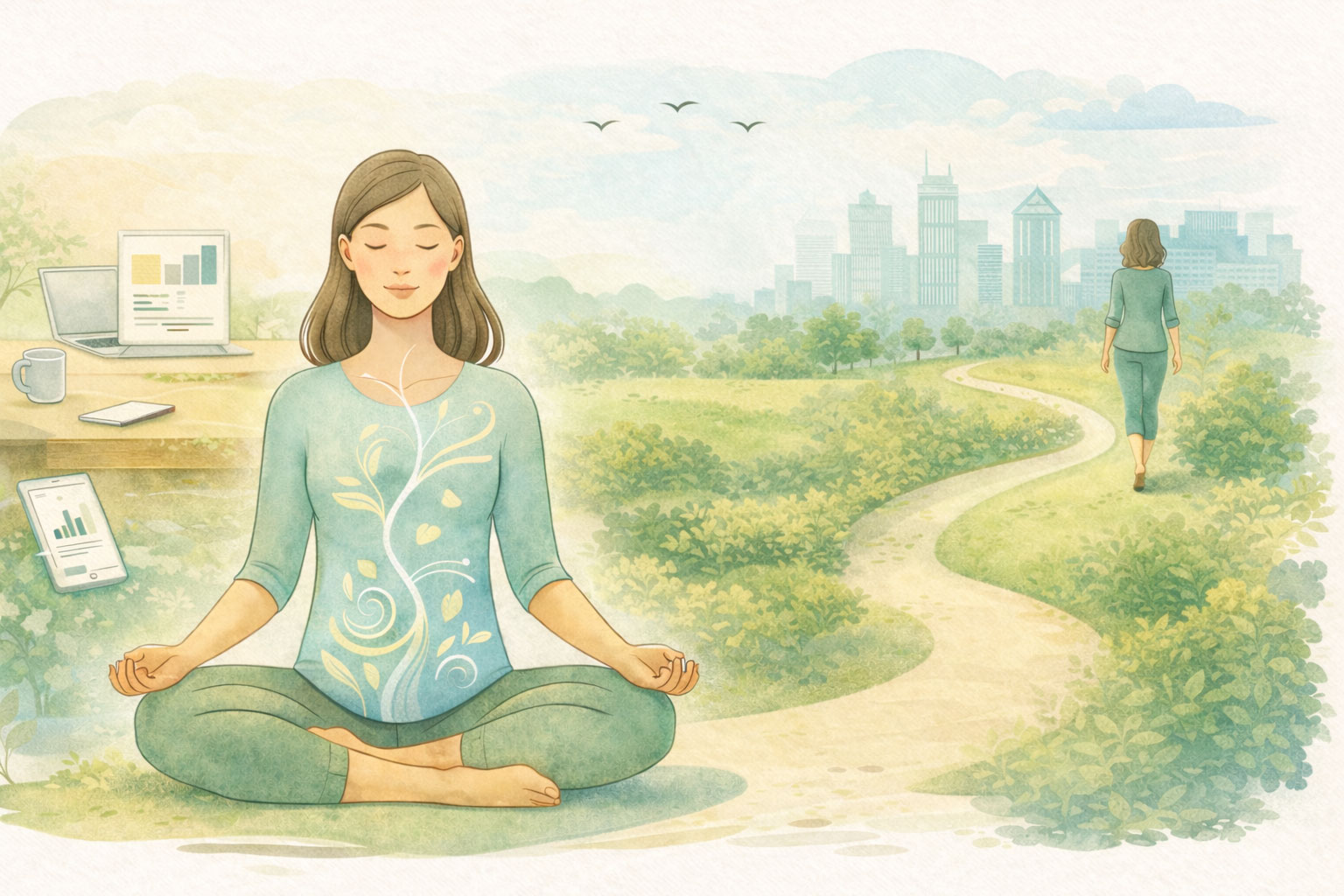
On the contrary: for me, yoga is one of the most vital resources in my life. It helps me stay in touch every day—with my body, my emotions, and my inner processes. For me, yoga works on several levels simultaneously. It connects.
Precisely because yoga can have such a profound effect, I take the framework surrounding it seriously.
The problem isn’t yoga.
The problem is yoga without context.
Without knowledge of nervous systems and individual needs.
Without real choices.
And without guidance.
Yoga is not neutral. It heightens awareness, deepens the connection to one’s inner self, and can set processes in motion. And that is precisely why a sense of responsibility is required.
Why guidance is crucial
People must not be left alone to deal with the effects of yoga.
When practice sets inner processes in motion—whether physical or emotional—guidance is needed. There is a need for space for questions. And there is a need for an attitude that regards every reaction as legitimate.
Providing guidance does not mean interpreting experiences.
Rather, it means being able to put them into perspective.
It means viewing protective mechanisms not as resistance, but as a form of competence.
It means offering choices: regulating intensity, orienting oneself outwardly, and taking breaks.
Especially in the context of mental health, this is not an additional qualification, but a foundation.
Yoga doesn’t end on the mat
For me, yoga is not an isolated practice lasting 60 or 90 minutes. It is a space for practice.
The mat can be a safe playground—a place where we can gain experience within a clear framework:
What does stability feel like?
How do I deal with resistance?
When do I push myself too hard?
When do I withdraw?
On the mat, we can explore these questions in a safe space. With pauses. With choices. With guidance.
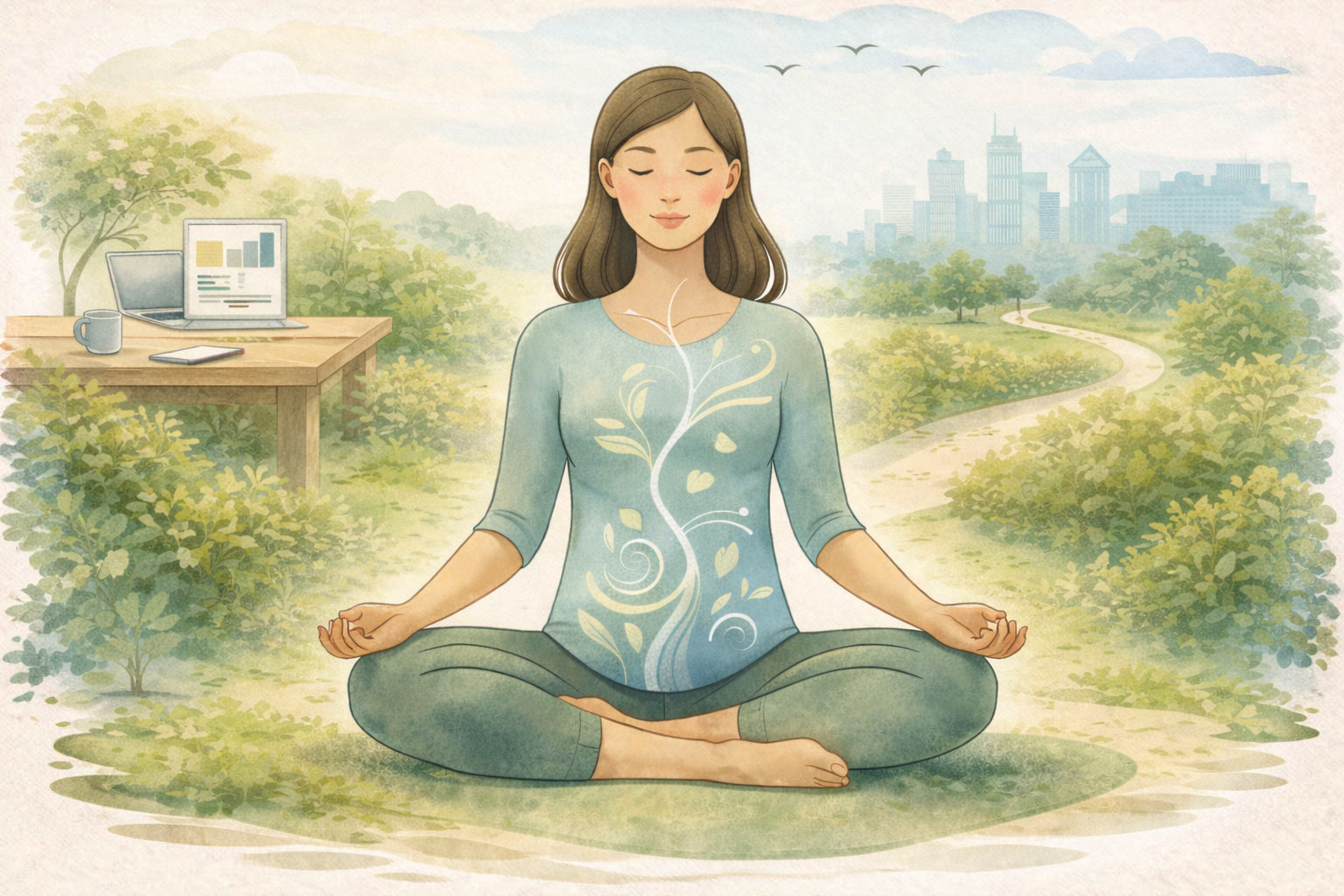
But yoga doesn’t want to stay on the mat.
The actual practice often only begins afterwards – in conversations, in dealing with pressure, in conflicts or moments of being overwhelmed.
If yoga helps us to respond more consciously in everyday life, to recognize boundaries, or to take ourselves seriously, then it fulfills its purpose.
If, however, it remains merely at the level of outward form, without being translated into life, it is reduced to mere movement.
Yoga is not a final state.
It is a training ground for life.

Perhaps yoga in the west needs more differentiation.
Yoga is valuable.
But it is not a universal remedy.
Perhaps it calls for fewer promises—and more precision.
Less standardization—and more individuality.
Less of a performance mindset—and more genuine awareness.
For me, yoga remains a deeply personal practice.
And that is precisely why I believe it is important to reflect consciously on how we approach it.