

Traumasensitive psychotherapy focusing on the body and nervous system
Traumasensitive psychotherapy focusing on the body and nervous system
In my psychotherapy practice, I combine conversation, body-oriented methods, and knowledge of the nervous system. It is important to me that change is not only understood but also experienced and felt—in the mind as well as in the body.
I am familiar with this path from personal experience as well. I have suffered from severe depression myself and experienced how helpful conversations can be in understanding underlying connections. At the same time, I have learned that true change begins when the body and the nervous system are also included. This experience and my professional training are closely integrated in my work.

My attitude & qualifications
My attitude & qualifications
I work as a naturopath for psychotherapy, using a traumasensitive, body-oriented approach.
For me, the focus is on an attentive, clear therapeutic relationship—one based on equality, at your pace, and with respect for your boundaries.
A central element of my work is a resource-oriented approach. Even when it doesn’t feel that way at times, there is usually already something solid to build on. Together, we focus on strengths, protective strategies, and small moments of self-efficacy that can help restore a sense of stability.
Depending on the need, various approaches that complement each other effectively are incorporated into my work:
- Rogers’ person-centered approach to conversation forms an important foundation. It creates a space where one can feel seen and taken seriously.
- Elements of cognitive behavioral therapy (CBT) help to recognize and contextualize internal patterns more consciously.
- Ego-state work enables a mindful approach to inner parts, particularly in the context of distressing or traumatic experiences.
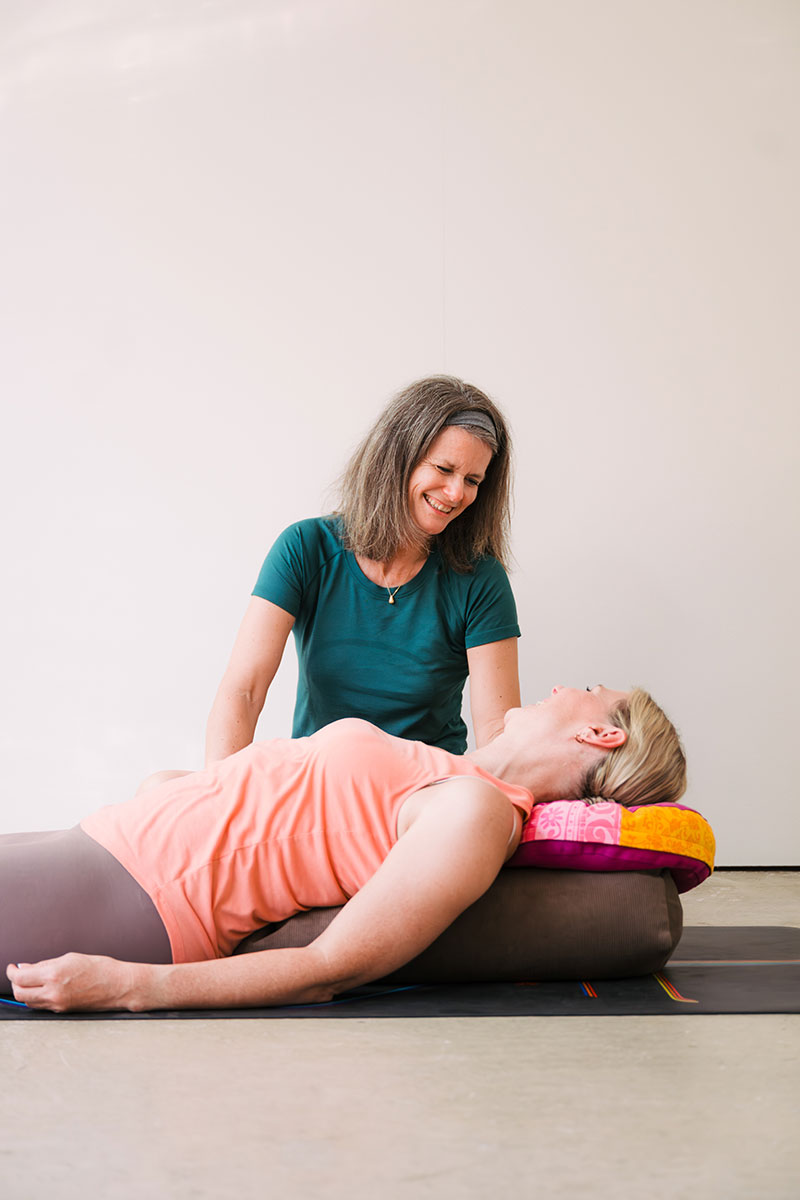
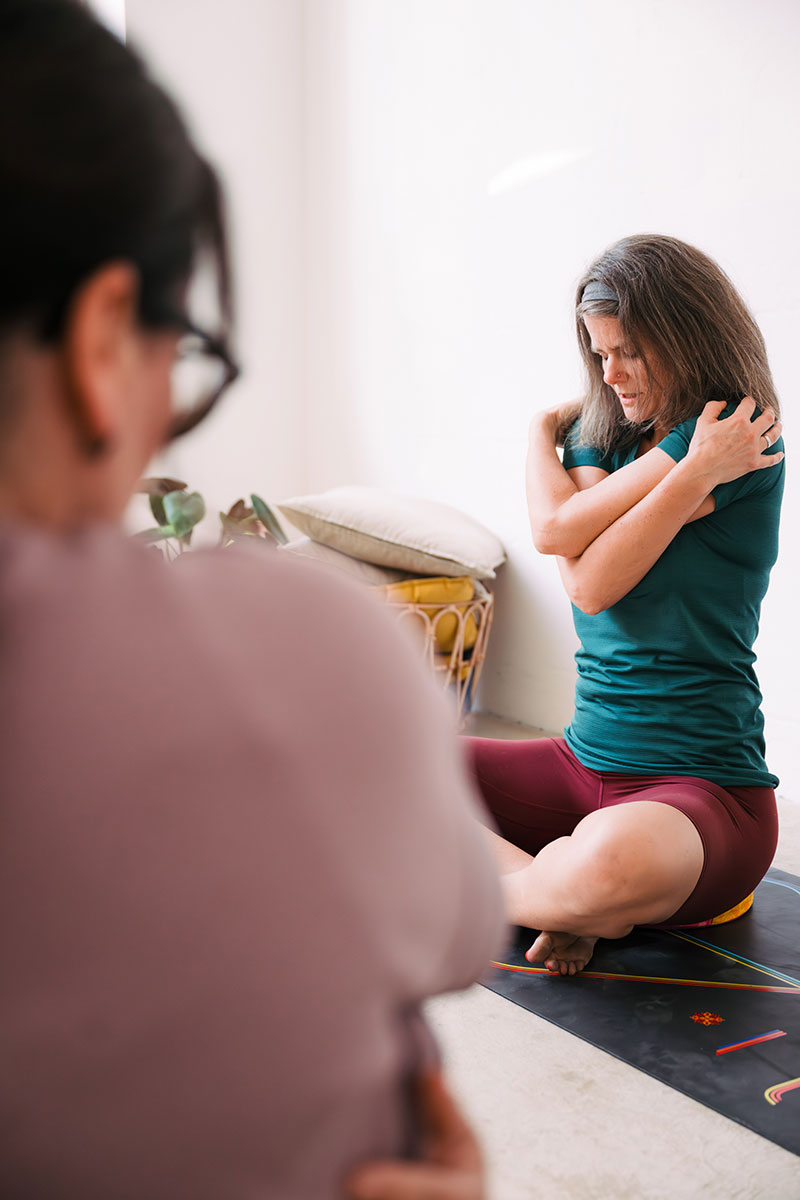
In addition, I work using a body-oriented approach and—where appropriate—incorporate elements of yoga therapy. I view yoga not as a sport, but as a gentle form of bodywork that supports self-regulation and inner stability.
How I incorporate the body into psychotherapy
When I talk about body-oriented psychotherapy, I don’t mean working on the body or fixed exercise programs. Rather, for me, the body is an important guide.
Distressing experiences often manifest physically—as tension, restlessness, exhaustion, or a vague sense of unease. In therapy, we observe these signals mindfully, without judging or forcing them.
No contact takes place.
Body-oriented work involves perception, language, inner awareness, and—where appropriate—guided, voluntary exercises that you perform yourself. Your boundaries are always the priority.

Bodywork, practice, and transfer to daily life
Body-oriented work is an essential part of my psychotherapeutic support. In our sessions, we work together to develop simple, practical exercises and tools that help you better regulate yourself and experience greater stability.
Change does not happen only in the therapeutic space.
Repetition and practice in everyday life are important so that new experiences can arrive in the nervous system and consolidate themselves. It’s not about perfection, but rather about gradually developing your own, sustainable way of dealing with yourself.


