
About me
My background, my path, my approach


About me
My background, my path, my approach
In my work, I combine dialogue, psychoeducation, and bodywork to support safety, self-regulation, and inner stability – especially regarding trauma, depression, and chronic stress.
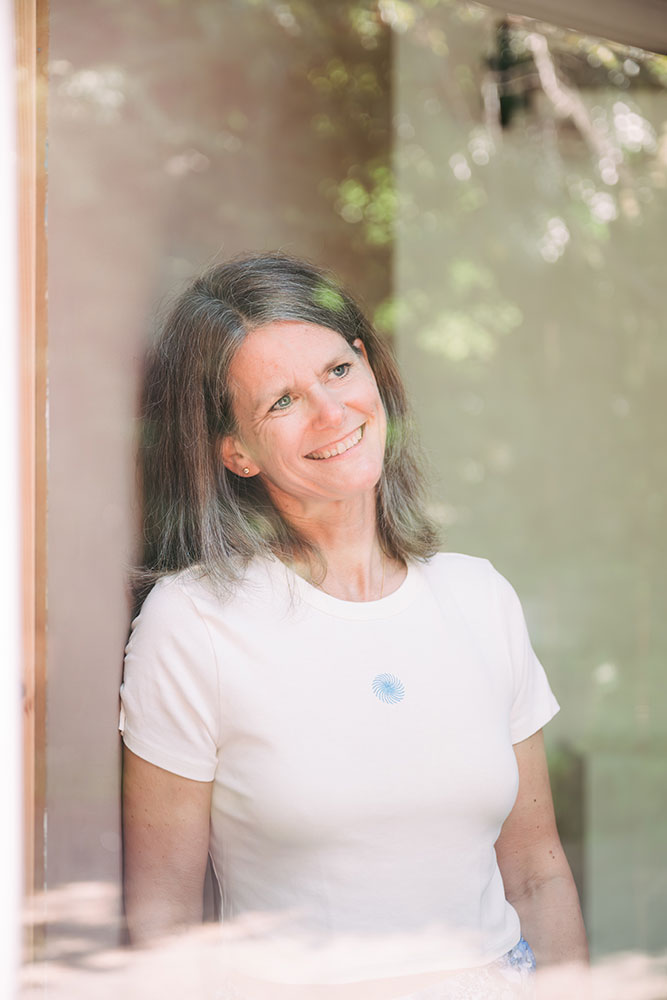
You can’t tell by looking at me.
But I have known dark days since my childhood.
I experienced depressive episodes early on – phases of heaviness, inner emptiness, and the feeling of being different. For a long time, I just functioned. I performed. I took on responsibility. I showed strength.
But inside, it often felt different.
It wasn’t until many years later that I began to understand: Depression is not a personal failure.
Its causes are complex – genetic factors, personal coping resources, formative experiences, and external events all intertwine. Understanding this complexity changed my perspective: away from guilt, toward responsibility in the sense of self-care and regulation.
A turning point for me was the combination of psychotherapy and yoga.
Psychotherapy helped me understand.
Yoga and bodywork helped me anchor that understanding within my nervous system.

@ Marcin/AdobeStock
You can’t tell by looking at me.
But I have known dark days since my childhood.
I experienced depressive episodes early on – phases of heaviness, inner emptiness, and the feeling of being different. For a long time, I just functioned. I performed. I took on responsibility. I showed strength.
But inside, it often felt different.
It wasn’t until many years later that I began to understand: Depression is not a personal failure.
Its causes are complex – genetic factors, personal coping resources, formative experiences, and external events all intertwine. Understanding this complexity changed my perspective: away from guilt, toward responsibility in the sense of self-care and regulation.
A turning point for me was the combination of psychotherapy and yoga.
Psychotherapy helped me understand.
Yoga and bodywork helped me anchor that understanding within my nervous system.
Why I combine psychotherapy, bodywork, and yoga therapy
In psychotherapy, I learned to recognize thought patterns, categorize biographical influences, and understand connections.
But sustainable change only began when I consciously involved my body.
For me, yoga became a decisive path.
Not the only possible path – but my path.
There are different therapeutic approaches that can promote regulation and integration. For me – and for many of my clients and participants – yoga therapy has proven to be particularly effective.
Through yoga, breathwork, and trauma-sensitive bodywork, I learned to:
- regulate my nervous system
- perceive stress reactions earlier
- process inner tensions rather than suppressing them
- build safety within my own body
Especially with depression and the effects of trauma, research increasingly shows how strongly body-oriented methods can support psychotherapeutic processes.
I have experienced it myself: integration occurs when cognitive work and bodywork act together.
That is why today I combine psychotherapeutically oriented reflection with yoga and yoga therapy – as an integrative approach, not to the exclusion of other paths.
My path – from the global system to individual support
I studied in the USA – a formative time that expanded my perspective on psychological, social, and international contexts.
For many years, I worked in international contexts, including a long tenure at UNICEF. There, the focus was on structural change and providing better perspectives for as many children as possible worldwide.
I was able to have an impact on a large scale.
The focus was on the collective.
Today, I support people individually – often high-achieving, committed individuals who suffer internally from depression, exhaustion, anxiety, or the consequences of distressing experiences.
The dimension of my work has changed – the attitude remains: responsibility, clarity, and the commitment to providing effective support.
What guides me is my curiosity. I continuously pursue further training – particularly in the field of trauma therapy methods, trauma-sensitive bodywork, and evidence-based yoga therapy.
My Services



I support people who are in a process of change – or who wish to begin one.
Many of my clients are functional in everyday life, professionally engaged, and at the same time under heavy internal strain. Some struggle with recurring depression, chronic stress, or anxiety.
Many also bring trauma experiences with them – not always consciously, not always named as such. Judgment is often directed toward one’s own self.
However, what is experienced as personal failure is often a logical reaction to overwhelm or a lack of safety.
My approach combines psychotherapeutically oriented reflection with body-oriented regulation through yoga and yoga therapy.
It is structured, integrative, and process-oriented.
If this form of support appeals to you, you can arrange a non-binding introductory meeting.
There, we will transparently clarify if and how working together makes sense.
Effective change occurs where the relationship sustains.
In a space where you do not have to remain alone with what burdens you.


