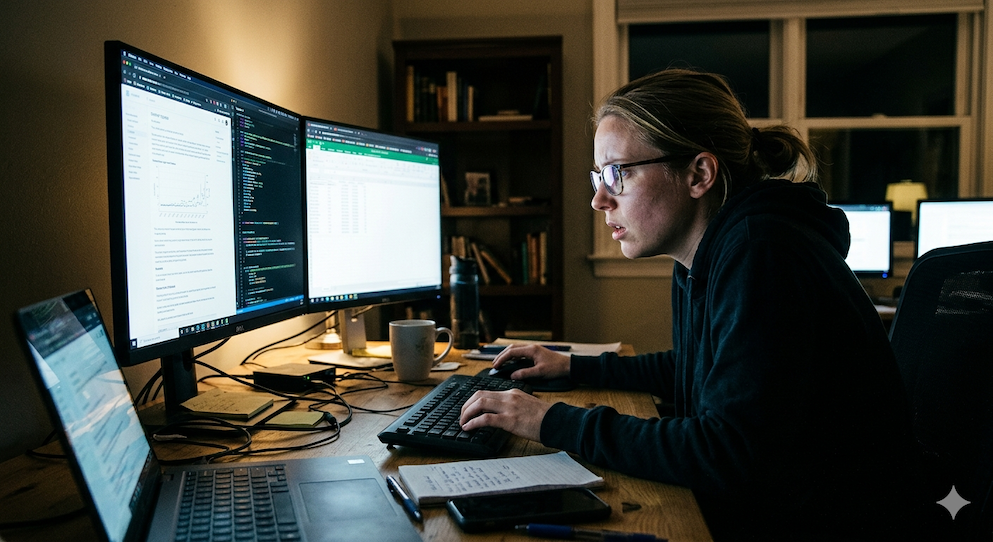
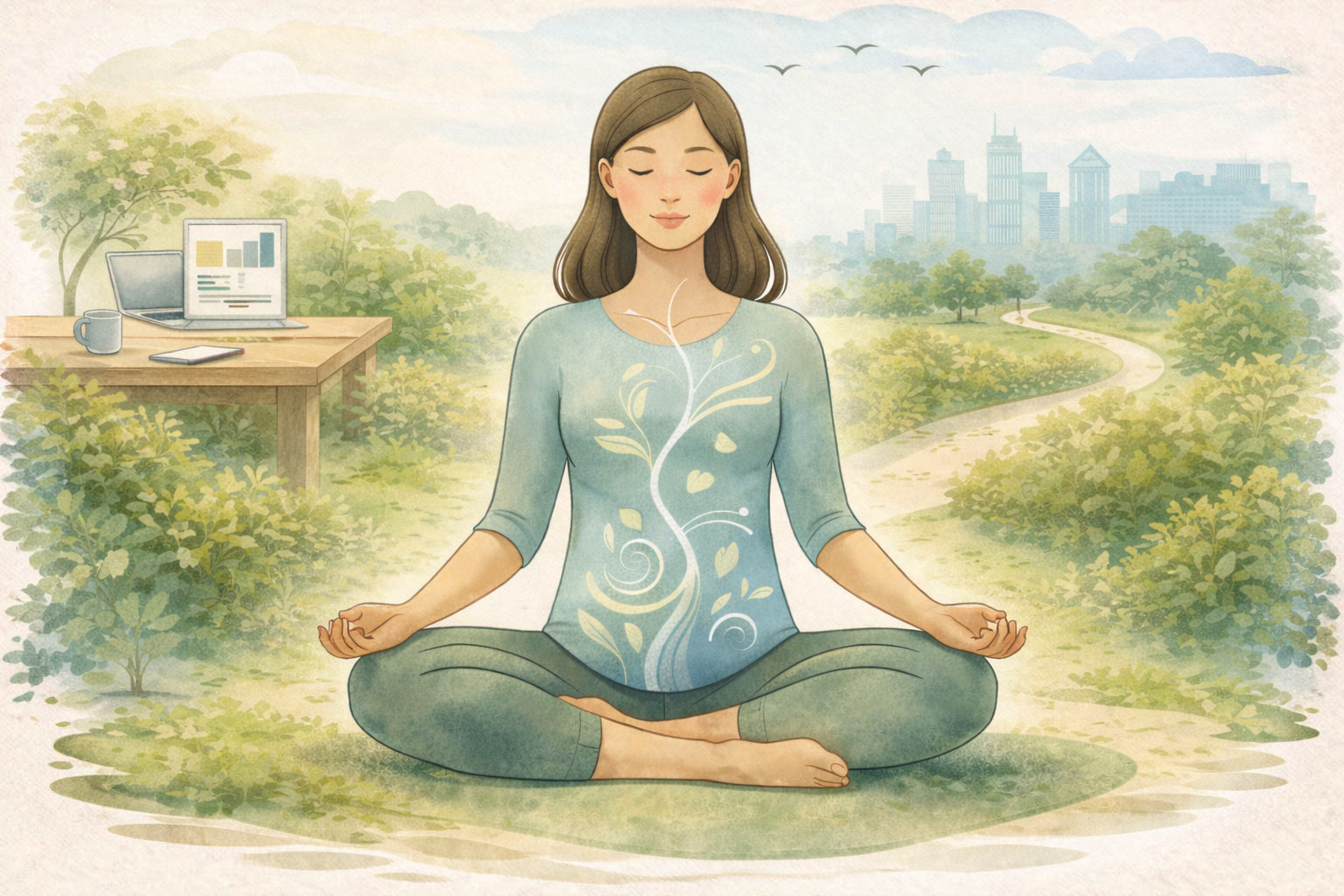
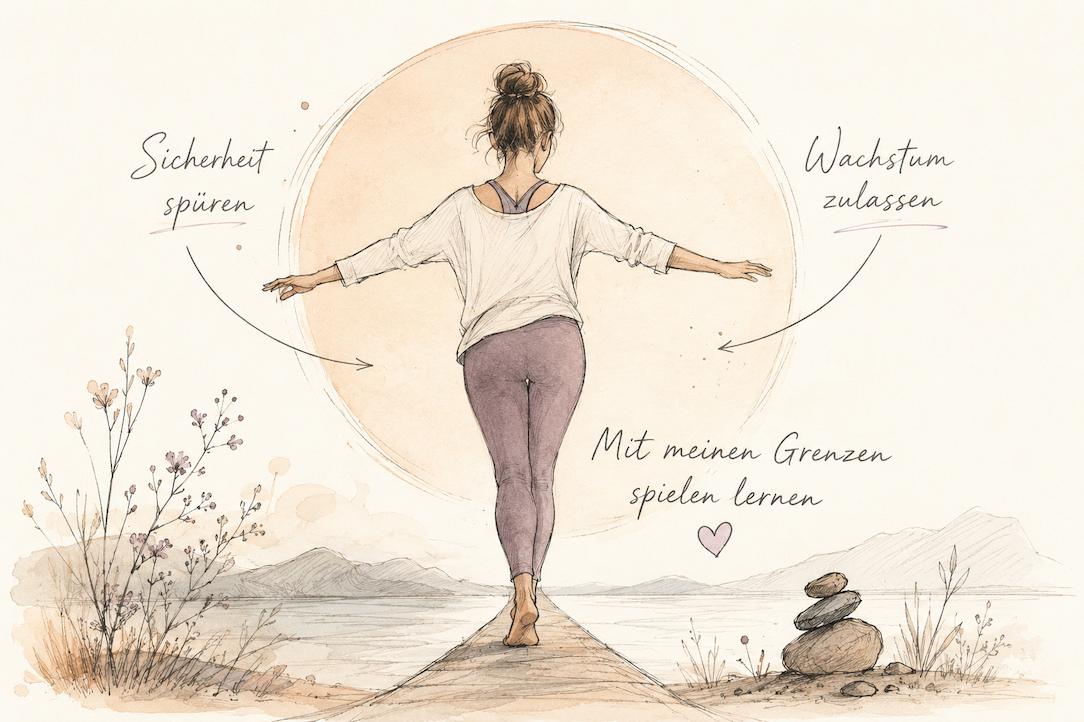
Do you know that feeling of being completely exhausted after a long day in front of a screen—even though you’ve barely moved? A fascinating *New York Times* article describes a phenomenon known as “screen apnea”: as we gaze at screens, read emails, or reply to messages, our breathing often unconsciously becomes shallower. Our nervous system reacts to this constant barrage of stimuli as if it were a potential threat—triggering tension, a freeze response, and shallow breathing. I have translated key points from the *New York Times* article into German and am sharing them in this newsletter—along with some initial ideas on how we can breathe more consciously, self-regulate, and bring more calm to our digital daily lives.
Screen time can cause our breathing to become shallower—a phenomenon known as “screen apnea.”
“Screen apnea” is a manifestation of our body’s stress response, explains Stephen Porges, a specialist in the autonomic nervous system. When we are confronted with any kind of stimulus, our nervous system looks for signals to determine whether or not a threat exists, according to Dr. Porges.
This level of concentration and attention requires mental effort. It triggers a chain of physiological changes—including shallower breathing and a slowing of the heart rate—designed to “calm” the body and mobilize resources that help us focus. He cites the example of cats stalking their prey: just before they strike, they often freeze, and their breathing becomes shallow. He says that essentially the same thing happens when we receive an email, a text message, or a Slack notification: we freeze briefly, read the message, and formulate a plan of action.

The more unexpected a stimulus is—for example, a text message that suddenly appears—the more likely the body is to perceive it as a threat.
While these reflexes are not necessarily harmful in themselves, they become problematic when triggered all day, every day. This is because doing so places “the nervous system in a chronic state of threat,” explains Dr. Porges. Hours of shallow breathing can leave you feeling exhausted after a workday—even if the work itself wasn’t particularly stressful.
A lack of physical activity due to prolonged sitting in front of a screen could also contribute to “screen apnea,” says David Spiegel. Disrupted breathing, he notes, is the result of “a combination of what you do and what you don’t do.” He observed screen apnea particularly in patients with high-stress jobs who worked long hours while getting little exercise or sleep.
However, there are a few simple habits that can help us breathe better, even in our increasingly screen-dominated daily lives:

Set up breathing reminders
A few gentle reminders throughout the day can help you consciously focus on your breathing again and again.
Ask yourself: Are you breathing through your mouth (which is often a sign of shallow breathing)? Are you even breathing consciously anymore? Simply becoming aware of this can help you step out of that unconscious stress mode.
If you notice that you are breathing shallowly or even briefly holding your breath, try to exhale audibly or sigh, recommends David Spiegel. Studies suggest that this can be a quick and simple way to regulate your breathing pattern. In a study published in January, Dr. Spiegel and his team found that while many breathing techniques are helpful, “cyclic sighing”—in which the exhale lasts longer than the inhale—is particularly effective for mood.
Consciously interrupt stimuli
Not every message needs to be answered immediately. Reducing notifications, creating brief screen-free moments, or intentionally incorporating phone-free breaks can help relieve the nervous system and restore a sense of calm and focus.
Use larger screens
Stephen Porges suggests that larger screens may place less strain on the nervous system. “The more we narrow our field of vision, the more the nervous system has to tune out everything outside of it,” he explains.
Answering messages on a large screen often feels easier than doing so on a smartphone, says Dr. Spiegel. Mobile phones, he notes, induce a particularly intense form of concentration and physical tension.
Make sure breaks are truly breaks.
While many people do step away from their computers briefly, they often spend their breaks looking at their phones instead, says Dr. Porges. It is more beneficial to engage in activities that require little mental effort—such as listening to music—during these intervals, allowing the nervous system to shift from a state of focus and high alert back to a state of relaxation.
Physical activity can also help restore balance, adds Dr. Spiegel—for instance, a short walk outdoors or in nature. “It’s a simple thing,” he says, “that can help our bodies function better.”
A version of this article appeared in the print edition of The New York Times on August 29, 2023, Section D, Page 6, under the headline: “Glued to the Screen? Then Try Catching Your Breath.”