When the days grow shorter and temperatures drop, something stirs within us. Nature retreats. Fields lie fallow, trees shed their foliage, and animals grow quieter. And what about us? We often try to fight against it. We keep up the pace, keep functioning, and are already planning for the coming year. And sometimes, we wonder why our bodies grow weary, why our souls cry out for more stillness.
In many traditions, particularly in yoga philosophy, nature is seen as a mirror of our inner lives. Winter is not simply “dark” or “cold”—it is an invitation. An invitation to pause, to turn inward, and to digest the year. And that is precisely what we often find difficult.
The Misunderstanding of “Retreat”
In our culture, “withdrawal” quickly takes on the connotation of weakness. Anyone who withdraws is seen as “unable to cope” or “lacking resilience.” Yet in yoga philosophy, withdrawal is a conscious act of strength. It even has its own name: *Pratyahara*—the withdrawal of the senses.
This does not mean isolating ourselves. Rather, it means learning not to constantly make the outside world the focal point of our inner experience. We turn our attention to what lives within—and in winter, there is often much to discover there:
- What has this year done to me?
- What experiences have moved me?
- Which wounds need warmth and time to heal?
- What wishes became visible?
Stillness does not mean stagnation. Stillness means integration.
Winter as a transitional space
Winter is a threshold between the old and the new. In nature, seeds can only germinate because they rest during the winter. Without this process, there would be no growth in the spring. In terms of yoga philosophy, this means:
Transformation requires periods without performance.
For people with a history of trauma, the “winter mode” can be especially valuable. After all, nervous systems that have long been in survival mode require periods of low stimulation, gentle movement, and safe spaces. The stillness of winter can offer exactly that—if we learn to trust it.
Yet silence can also be frightening. It can bring to the surface what we mask with activity in our daily lives. That is normal. And that is why being kind to yourself is so important during this time.
Living yoga philosophy in winter
To consciously experience the quality of winter, we can be guided by three principles:
1. Gentleness
(Sukha)
Not everything has to be decided today.
Not every day needs a result.
Give yourself permission to slow down.
Being gentle isn’t “less”—it is wise.
2. Perception
(Svādhyāya – Self-exploration)
Notice what is stirring within you.
Without rating.
Without analysis.
Just observe.
What does your body feel when you settle down?
Where is the tension located?
Where is there vastness?
3. Trusting in cycles
No winter lasts forever.
The light is coming back.
Always.
When we look at nature, we see: everything is in motion, everything lives in waves. We can surrender ourselves to these waves.
Traumasensitive yoga in winter
In occupational therapy with people dealing with trauma or illness, we often shift our focus during the winter months. Not dynamic flows, not “power,” but rather:
- Soft, supportive spaces for the breath
- Movements that provide a sense of stability
- Body scan instead of stretching
- Pauses between the asanas
- Many options, low expectations
It is about allowing yourself to feel yourself again—not about optimizing yourself.
A very simple exercise for the winter is:
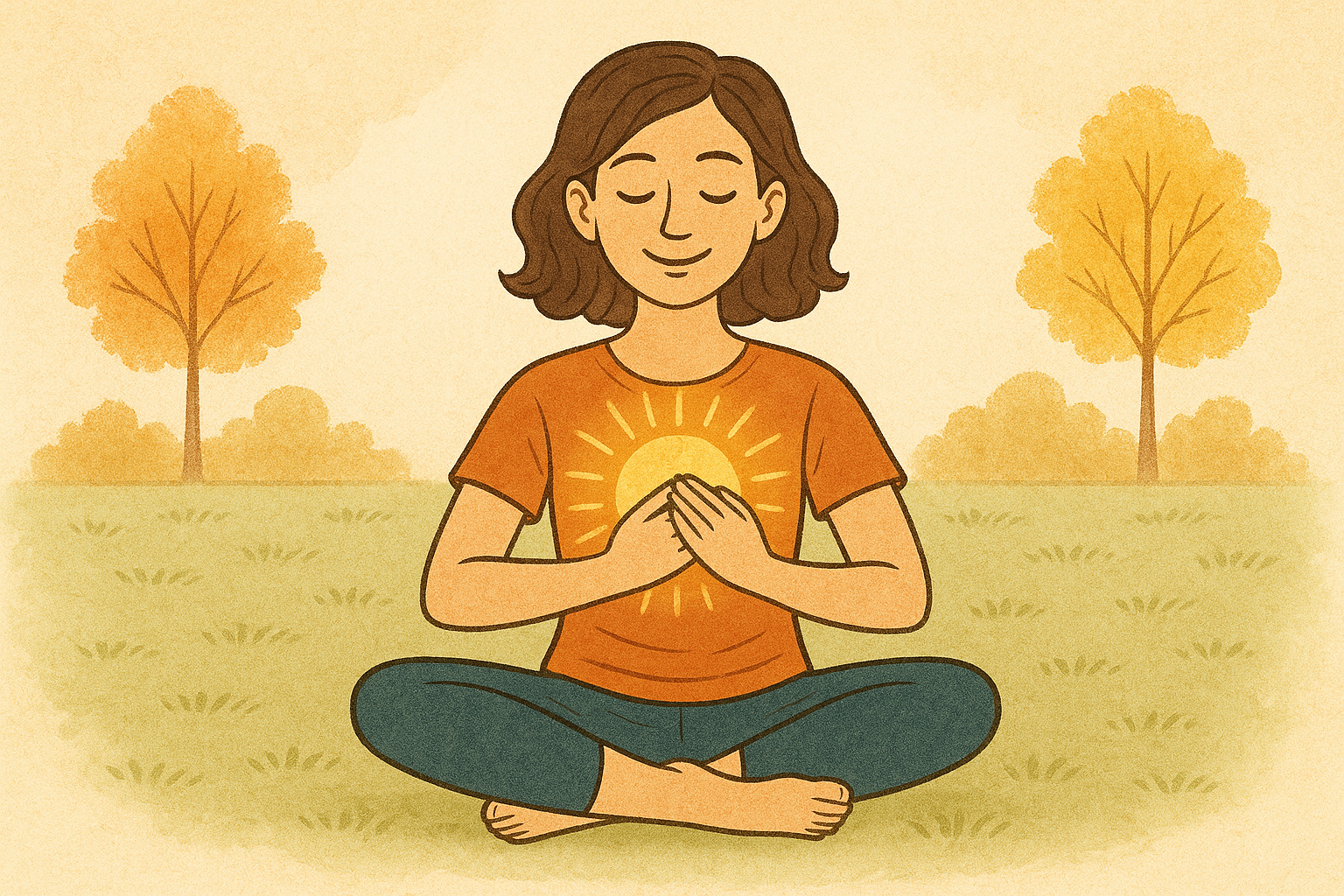
Hand on your heart – hand on your belly.
Invite three breaths.
Not deeper, not better – just feel.
I am here. That is enough.
This exercise is not a “tool.” It is a door-opener. A reminder that we are allowed to exist, even when we aren’t accomplishing anything.
Winter as a time for the soul
Perhaps a lot has happened this year.
Perhaps it was exhausting.
Perhaps you are carrying something heavy right now.
And perhaps a quiet moment is possible right now.
You don’t have to let anything go.
You don’t have to process anything.
You don’t have to find anything.
You are simply allowed to:
Be.
The Yoga Sutra states:
Yoga is the settling of the movements of the mind into stillness.
Winter invites us to do exactly that—not by force, but with quiet friendliness.
A personal thought for this month
Perhaps you might want to ask yourself sometime over the next few weeks:
What would happen if I allowed myself to feel less of a need to do things?
Perhaps space will open up. Perhaps a sense of expansiveness will emerge.
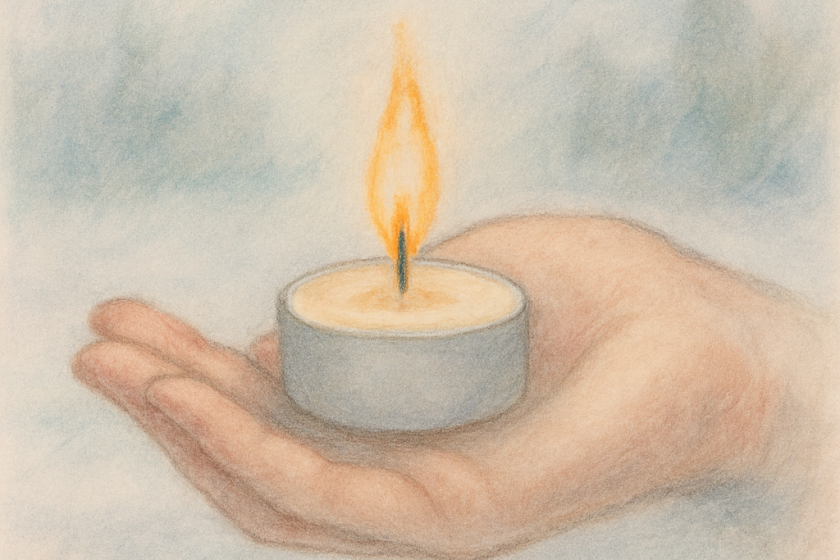
Perhaps a small point of light will appear—one you can carry with you into the new year.
And when the darkness sometimes feels heavy – remember:
The seeds underground also lie warm and safe in the darkness.