Why self-care in the new year has nothing to do with self-centeredness or self-optimization – a yoga-therapeutic perspective
For many people, the start of the year is not a fresh start, but a source of internal stress. We write long lists: more discipline, more exercise, less stress, better routines, a “better self.”
What is often overlooked in the process is that, with these lists, we place ourselves under immense pressure right from the start—and create the very conditions under which failure becomes almost inevitable.
For these resolutions convey a clear message: the way you are isn’t enough yet.
They rarely take into account what our everyday lives actually look like, how exhausted many of us are, or the extent to which our nervous systems are already operating under constant stress. Instead, they demand perseverance, control, and self-discipline.
And when we—unsurprisingly—fail to remain consistent, something very predictable happens: the inner critic takes command.
Suddenly it’s no longer about development, but about self-devaluation. “I wanted to do something good for myself” becomes “I can’t manage it again.” Many then give up completely – not only in terms of their intention, but also in how they deal with themselves.
From a yoga-therapeutic perspective, this is not a personal failure. It is the logical consequence of a system that relies on pressure rather than self-regulation.

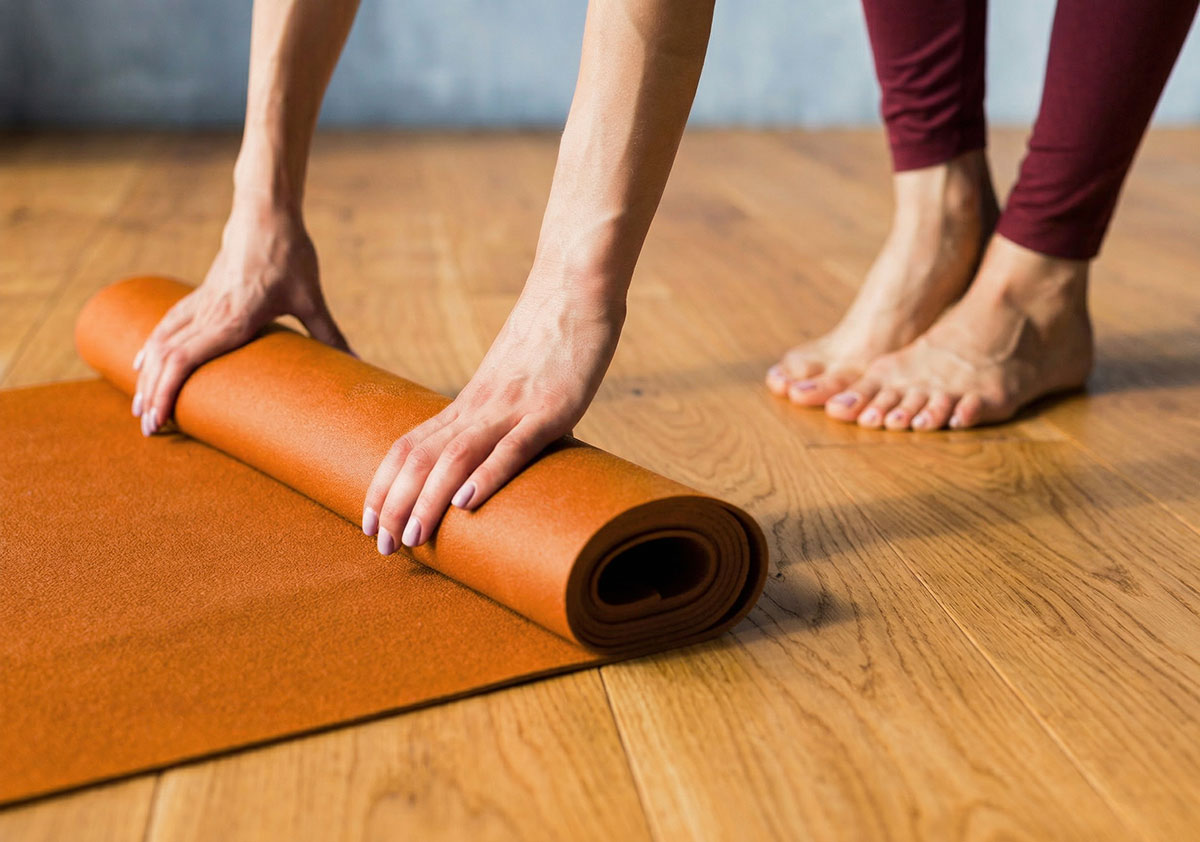
© freepik/freepik.com
Self-care is not self-centeredness
It is precisely on this point that confusion often arises: self-care is equated with selfishness or egocentrism.
But that is a fundamental error.
Egocentrism means placing one’s own needs above those of others, disregarding boundaries, and losing sight of the relationship.
Self-care, on the other hand, means recognizing one’s own needs, taking responsibility for one’s own state, and regulating one’s nervous system in such a way that relationship remains possible in the first place.
In yoga therapy, we view self-care not as a withdrawal from life, but as a prerequisite for a healthy, connected existence. Those who consistently push past their own limits do not become more generous, helpful, or present—but rather exhausted, irritable, or mentally disengaged.
Taking good care of yourself is therefore not a sign of self-centeredness, but of self-responsibility.

© freepik/freepik.com
Self-care is not self-optimization, either
Especially at the beginning of the year, it is important to clearly distinguish self-care from self-optimization.
Self-optimization often follows these internal assumptions:
- I’m not good enough yet
- I need to improve
- Rest is only worthwhile if it makes me more capable
Self-care—particularly in the sense of yoga therapy—is based on a different mindset.
It proceeds from the premise that we do not need to be fixed or optimized, but rather that we can learn to perceive ourselves anew.
In yoga philosophy, ahimsa plays a central role here. It refers not only to abstaining from external violence but also to how we treat ourselves internally. Constant pressure, self-deprecation, and ignoring exhaustion are subtle forms of violence.
Yoga and yoga therapy invite us to pause, to feel, and not to constantly subordinate the value of being to doing.
Why recovery is not a luxury
Many people have forgotten how to allow for genuine regeneration. Breaks are filled, rest is optimized, and even relaxation is expected to be “effective.”
But our nervous system does not operate according to the logic of performance.
From the perspective of yoga therapy and work with stress and trauma, one thing is clear: regeneration is not a bonus—it is essential.
Regular rest supports:
- the regulation of the nervous system
- emotional stability
- ability to concentrate
- physical health
Beautiful moments, conscious stillness, and nourishing experiences are not things we have to earn. They are what keep our system in balance.
Here, yoga does not function as just another item on a to-do list, but rather as a space for experience: breath, gentle movement, conscious awareness, and pauses signal safety. They help the body step out of a state of constant high alert.
Yoga philosophy: kindness instead of pressure
Self-care is also deeply rooted in yoga from a philosophical perspective. Concepts such as Santosa—contentment—remind us that inner peace arises not from constant striving, but from acknowledging what is.

In this sense, self-care means:
- to respect one’s own rhythm
- to view one’s own history with compassion
- not constantly overstepping one’s own boundaries
Especially for people who have experienced stress, trauma, or illness, this is not a minor matter, but a central path to healing.
Making yourself a priority – a conscious decision
Maybe this year is not the time to achieve more. Maybe it’s the moment to treat yourself differently.
What if your resolution wasn’t “more discipline,” but “more kindness”?
What if you consciously created space for regeneration—not just when everything is done, but because your well-being matters?
Self-care often begins not with major changes, but with small, clear decisions:
- to take a break seriously
- to accept support
- to seek out a protected space
Make your mark now – instead of reacting later.
Our well-being does not arise only when we are exhausted. It stems from the decisions we make early on.
If we simply let the year “run its course,” we often find ourselves merely reacting—to stress, deadlines, and external demands. By consciously setting priorities now, however, we actively shape the year ahead—incorporating planned pockets of regeneration, connection, and yoga-therapeutic bodywork.
That is precisely the idea behind the New Year’s special on January 10th and the retreat from July 17th to 19th: not as a stopgap measure, but as intentional highlights of the year. They serve as fixed points upon which the body and nervous system can align themselves—well before a state of overwhelm sets in.
In this way, yoga therapy and trauma-sensitive yoga can provide not only short-term relief but also shape the entire year to be more stable, clear, and kind.
Conclusion
Taking good care of yourself is not selfishness. It is an act of responsibility, mindfulness, and compassion—towards yourself, and therefore towards the world as well.
Perhaps the most important decision for this year isn’t what you achieve, but how you treat yourself.