A yoga-philosophical impulse for autumn and for people on the path of trauma healing.
Autumn carries a special resonance. The air grows clearer, the days shorter, and the colors more intense. It is a time when nature lets go—visibly, quietly, and naturally. And yet, many people—especially those who have experienced trauma—sense a quiet inner restlessness during this season. As things grow quieter, certain things surface that went unnoticed amidst the bustle of summer.
In yoga philosophy, we find a beautiful term that describes precisely this quality of the present moment: Ritambharā Prajñā—the truth born of silence. It is the wisdom that arises beyond thought and analysis when we listen deeply—not outwardly, but within ourselves. This quality is closely linked to what takes place in yoga therapy: a mindful tuning-in that encompasses body, breath, and soul alike.
What is Ritambharā Prajñā?
The term originates from Patañjali’s Yoga Sūtras (1.48). It describes a state of mind in which perception is free from distortion, fear, and projection. Ritambharā Prajñā is the intuitive recognition of what is real—a form of knowledge that arises not from experience or learning, but from inner clarity.
For those with a history of trauma, this idea may initially seem alien. After all, trauma creates separation—from the body, from trust, and from the ability to experience the world as safe and real. *Ritambharā Prajñā*, by contrast, arises precisely from this connection: from the ability to become still, to sense, and to perceive truth within that sensing. In traumasensitive yoga therapy, we support this very process—gently, with a focus on the body, and free from pressure.
Autumn as a reflection of the healing process
Autumn invites us to practice exactly that: letting go of what no longer sustains us. Leaves do not fall out of weakness, but out of wisdom. They know when the time has come to let go. We, too, can learn that letting go is not a loss, but a form of trust.
Yet for traumatized individuals, letting go can be frightening. Control was often essential for survival. Silence can feel threatening, and darkness unsafe. And yet, therein lies the opportunity: in a gentle, gradual return to silence—not as a demand, but as an invitation.
Perhaps healing in autumn doesn’t mean letting go of everything, but simply holding on a little less tightly.
Ritambharā Prajñā and bodywork
In yoga therapy and trauma therapy we talk about the fact that healing does not happen through thinking, but through experiencing. You cannot “do” Ritambharā Prajñā. But we can create the conditions in which it appears – just like nature, which does not force leaves to fall. She’s just preparing.
A trauma-sensitive yoga practice in autumn could look like this:
Grounding pose:
Tadasana (Mountain Pose) or Balasana (Child’s Pose). Feel gravity. Let the earth support you.
Breathing exercise:
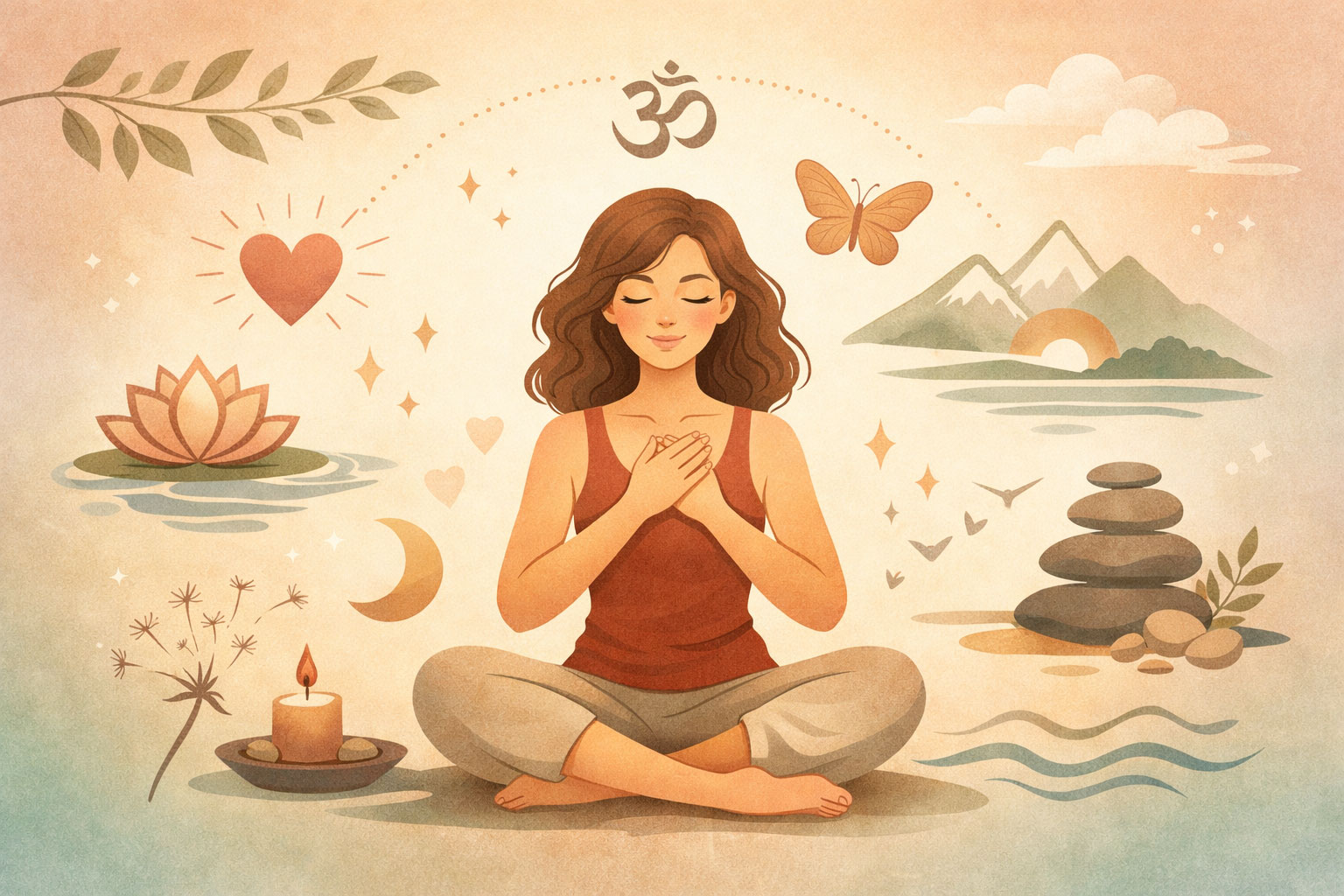
Place one hand on your belly and the other on your heart. Breathe in through your nose and out through your mouth. Observe how the breath gently moves you. No goal, no obligation—simply noticing.
Pratyahara – Withdrawal of the senses:
Close your eyes for a moment. Sense the sounds around you and the contact of your body with the ground. Listen without judgment.
These simple exercises are like small gateways to inner stillness. They prepare the space in which *Ritambharā Prajñā*—that subtle, silent knowing—can emerge. At the same time, they are an expression of traumasensitive bodywork: gentle, stabilizing, and healing.
Trauma and the fear of silence
Many of my clients report that the dark season stirs up old memories or feelings of loneliness. This is not a step backward, but a natural reaction of the nervous system. In the quiet, things that were masked during the summer become palpable.
Traumasensitive yoga therapy can help here to rediscover the body as a safe place. The practice is not about plunging into the darkness, but rather facing it step by step—with breath, movement, warmth, and light.
A simple orientation exercise
This exercise can help anchor you in the here and now when silence or darkness triggers restlessness:
- Look around. Notice three things in your room that are familiar or pleasant to you—a plant, a light, a book.
- Feel your body. Feel the contact of your feet with the floor or your hands with your thighs.
- Breathe consciously. Breathe in – you are here. Breathe out – you are safe.
- Name quietly: “I am here. I see… (name something in the room). I feel… (name a physical sensation).”
- If you like, move gently: roll your shoulders, stretch your arms, and feel your limits.
This short exercise can help ground you when old memories or feelings surface. It creates a connection to the present moment—the place where healing becomes possible in the first place.
Small practice for autumn
Some people with a history of trauma may find that breathing exercises or self-touch feel uncomfortable at first. Please be gentle with yourself and take only what feels safe for you from this exercise. You are free to keep your eyes open, let your breath flow naturally, or simply find a posture that provides stability. Whatever you feel—or don’t feel—is perfectly fine.
If you like, try this simple exercise:
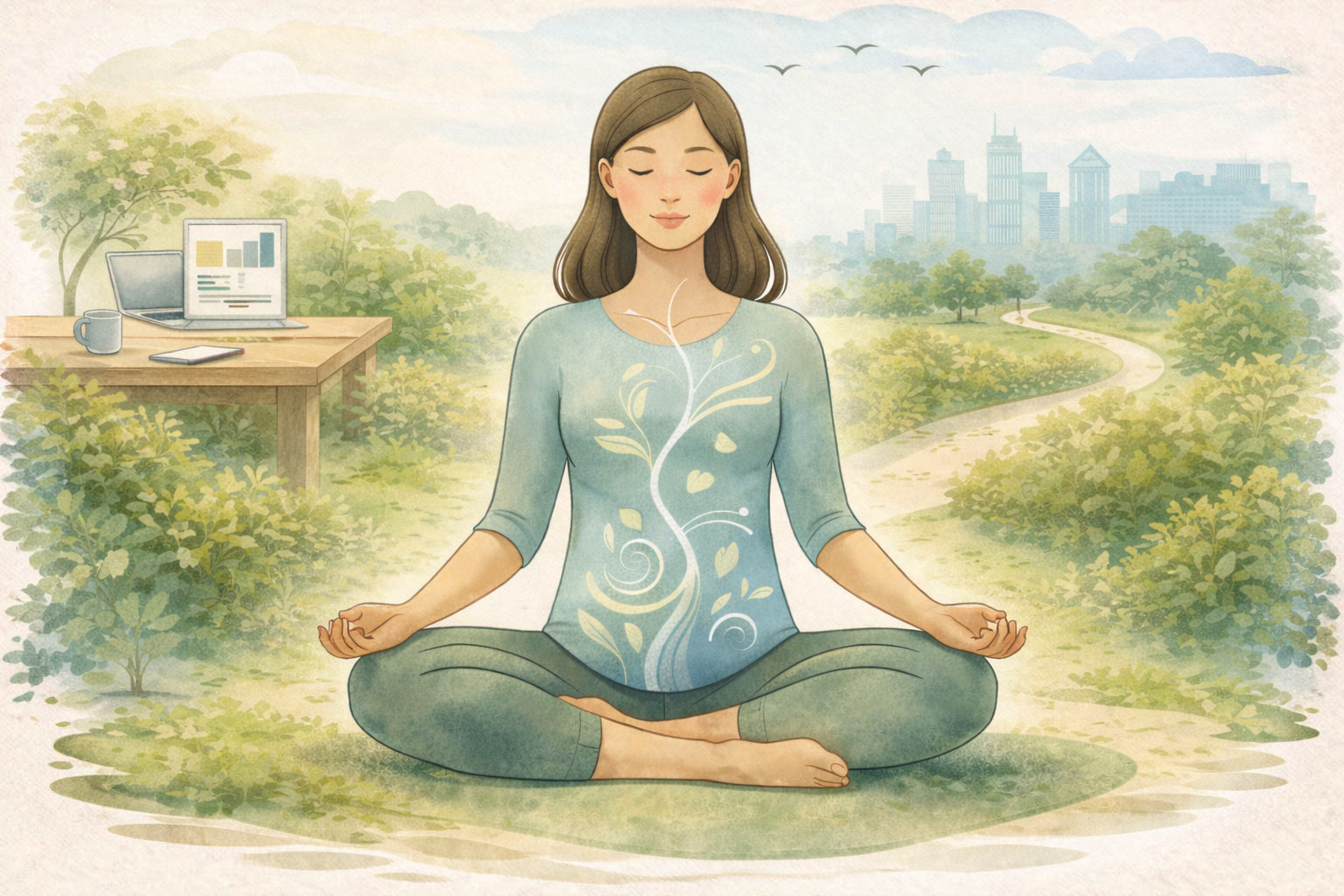
- Find a quiet place. Sit down comfortably and feel the ground beneath you.
- Take three deep breaths in and out. Oder: Spüre einfach, dass du atmest, ohne etwas zu verändern.
- Place your hands on your heart—if it feels right. Or simply rest them loosely in your lap.
- Ask yourself quietly: What is true now – beyond fear and history? Not what is “right,” but what you actually feel or need in that moment.
- Stay with this awareness for a few breaths or moments. Let them spread without changing them.
You might feel warmth, perhaps cold, or perhaps nothing at all. Everything is fine. Ritambharā Prajñā does not manifest as an answer, but rather as a subtle sense of rightness.
From doing to being
In autumn, nature withdraws. It does not produce; it regenerates. For many of us, this is difficult. We are accustomed to functioning, performing, and “getting things done.” Yet healing does not happen in doing, but in being.
Ritambharā Prajñā is a reminder that truth, clarity, and healing do not arise from effort, but from the willingness to grow still and listen.
Perhaps this is the true task of this autumn: no longer to search, but to find—within ourselves.
Concluding thought
If you feel moments of heaviness or loneliness this time of year, remember this: even nature does not doubt itself when it loses its leaves. She knows that new life emerges from this emptiness.
Trust grows in silence.
And in trust, truth reveals itself—Ritambharā Prajñā.
As a yoga therapist, I guide people on their journey to reconnecting with themselves and their bodies—mindfully, in a trauma-sensitive way, and at their own pace. If you would like to embark on this path—step by step, with your body as a safe anchor—I would be happy to support you.
In my traumasensitive coaching, I combine elements of yoga therapy, mindfulness, and bodywork to guide you in developing inner calm, trust, and stability.