Traumatic experiences can profoundly alter a person’s life—emotionally, physically, and in their relationships. They leave traces that, while not always visible, are deeply felt. Yet not all trauma is the same: shock trauma—resulting from accidents, acts of violence, or natural disasters—differs fundamentally from attachment and developmental trauma, which typically originate in early childhood. Everyone reacts differently and requires an individual path toward integrating the trauma.
The best therapy for trauma is not a rigid concept, but a dynamic, holistic process. It takes into account a person’s personal history, inner resources, and current life circumstances. Effective trauma therapy operates on multiple levels—emotional, cognitive, physical, and interpersonal—creating space for integration, growth, and a zest for life. A combination of psychoeducation, talk therapy, and yoga-based bodywork proves particularly effective, as it bridges the gap between understanding and sensing.
In this post, I show you which factors enable supportive and sustainable trauma integration—and why this specific combination of therapy and yoga therapy can be so healing.
1. Individualized trauma therapy instead of a one-size-fits-all approach
Every person experiences trauma in their own way. That’s why you need a therapy that is flexibly tailored to you. Not a one-size-fits-all solution, but an approach that takes into account your personal history, your life circumstances and your inner strengths.
Individual trauma therapy allows you to work at your own pace—using methods that feel right for you. Whether it involves talk therapy, EMDR, imagery-based techniques, systemic work, creative approaches, or body-oriented techniques like yoga therapy, you have a say in what benefits you and helps you progress on your journey of trauma integration. This creates space for self-reflection, personal growth, and the genuine integration of your experiences.
Another important question is: What do you need today, in this very moment? Sometimes it is stabilization. Sometimes it is grief. Sometimes it is silence. A good therapist explores this with you—without overwhelming you with a rigid “roadmap.”

© AYAimages/AdobeStock
No blanket solutions – your therapy will be tailored to you!
2. The healing relationship as the foundation of every therapy
Healing requires safety. And safety arises from the relationship between you and your therapist. A professional therapeutic relationship is characterized by respect, reliability, and authenticity—not by friendship or a closeness that blurs boundaries.
Good therapy creates a protected space for your issues. Your counterpart does not approach you from above, but rather at eye level. Trust does not develop overnight – and especially in trauma integration, relationship building is often a process in itself.
What matters is that you are taken seriously—and actively involved. This strengthens your sense of self-efficacy and control, which may have been shaken by trauma. The therapeutic relationship itself can also become a space for experiencing new forms of attachment—safe, respectful, and nurturing.

3. Competence, experience, and personal experience in trauma therapy
Trauma therapy is a demanding task. Therefore, your therapist should possess not only sound knowledge but also practical experience—particularly in dealing with symptoms such as dissociation, anxiety disorders, depression, or physical reactions.
Continuous further training is equally important—especially in the fields of bodywork and yoga therapy, given the significant developments in these areas in recent years. After all, a truly holistic therapy views the individual as a unified whole comprising body, mind, and soul.
Personal experience is also a mark of quality: those who know themselves can guide others with empathy and responsibility—and hold the space for genuine healing.

@StockPhotoPro/AdobeStock
4. Body and Psyche: Why Yoga Therapy Supports Trauma Integration
Trauma affects not only our thoughts and feelings but also reaches deep into the body. Many people experience tension, pain, numbness, or a sense of constant inner tension. Others barely feel themselves anymore—as if they were disconnected from their own bodies.
Trauma that occurs in early childhood or even before is often not accessible through language – simply because the child did not yet have language available at that time. Later, trauma often has a direct impact on the language center in the brain – so much so that many of those affected are literally at a loss for words. This explains why purely conversation-based therapy often has its limits and why body-oriented approaches such as yoga therapy are so valuable.
This is where yoga therapy comes in—as a trauma-sensitive form of bodywork that does not overwhelm, but rather mindfully guides you back into connection.
Psychoeducation helps you understand what is happening inside you: how trauma affects the nervous system and why your reactions make sense. This knowledge brings relief, provides a sense of direction, and strengthens self-acceptance.
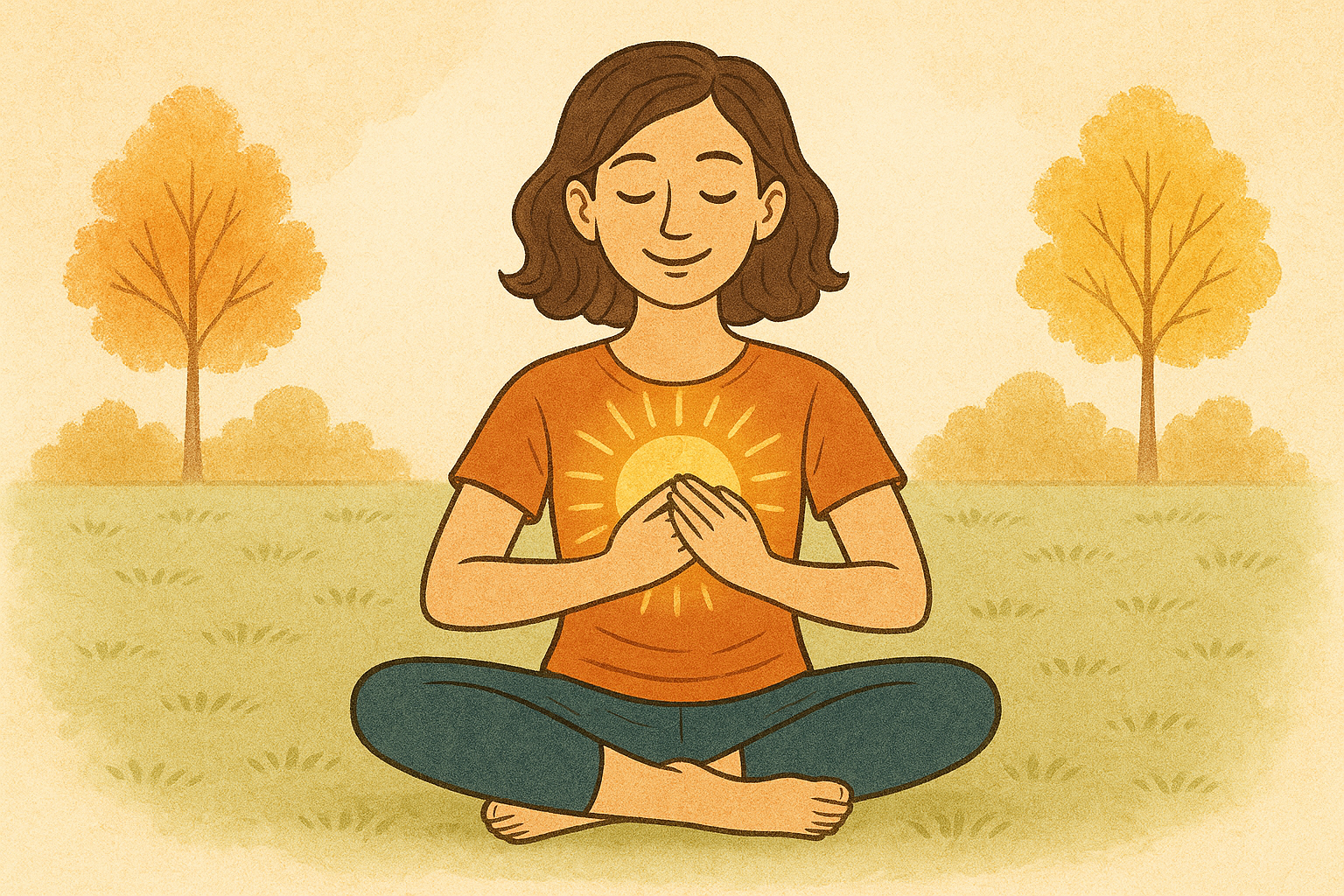
Bodywork—such as gentle yoga, breathing exercises, or mindful movement—supports the regulation of the nervous system. You learn to tune into your body, recognize signals early on, and set healthy boundaries. In this way, healing is not merely a concept—it is embodied.
The combination of talk therapy, psychoeducation, and yoga-therapeutic bodywork is particularly effective—because it addresses both body and psyche simultaneously and enables integration on all levels.

@anon/AdobeStock
5. Therapeutic goals: Orientation with room for development
Good therapy has a goal—but no rigid plan. For trauma integration does not follow a linear path. Setbacks are part of the process. Emotional waves, insights, new inner shifts.
That is why it is helpful to formulate goals flexibly—and to reflect on them together regularly. Perhaps at first you simply want more stability, whereas later on, experiencing the joy of living or closeness becomes important to you.
A flexible therapist accompanies you on this journey, remaining open to whatever emerges—and using methods that engage body, mind, and soul. Bodywork plays a key role here, too: sometimes change arises not from words, but from a new sense of the body.

6. Resource-orientation in trauma integration: You are more than your trauma.
Trauma integration is not just about pain – but also about what remains intact within you. Resource-oriented therapy strengthens your access to inner sources of strength: resilience, intuition, connection, creativity.
Yoga therapy, in particular, can help anchor resources within the body: a sense of grounding, depth of breath, and inner space. Imagery, music, nature, or spiritual experiences can also have a stabilizing effect.
Healing means being able to shape your own life again—beyond the imprint of old wounds.

7. Integration instead of displacement: The core of any holistic trauma therapy
Many wish to leave trauma behind them. Yet repression consumes energy—and prevents deep healing.
The goal of holistic trauma therapy is to integrate what you have experienced—not to forget it. You are free to acknowledge what happened without being overwhelmed by it. You learn to embrace your story and treat yourself with compassion.
Here, too, bodywork helps to hold emotional processes. The experience of remaining present in the body creates a sense of safety—and makes change possible in the first place.

Conclusion: Holistic trauma therapy and yoga therapy make it possible to rediscover the joy of living.
The best therapy is not a method, but an attitude. It is holistic, individualized, and resource-oriented. It combines psychoeducation, conversation, and bodywork—and enables genuine trauma integration.
Yoga therapy opens up paths that go beyond understanding—and uses the body as a key to healing.
Trauma separates. Therapy connects—you with yourself, your body, your feelings. Step by step.
And eventually, the joy of living returns. In a single breath. In a moment of calm. In the quiet certainty:
A fulfilling life is possible even after deep suffering. You are more than your story. And you are allowed to become whole again.