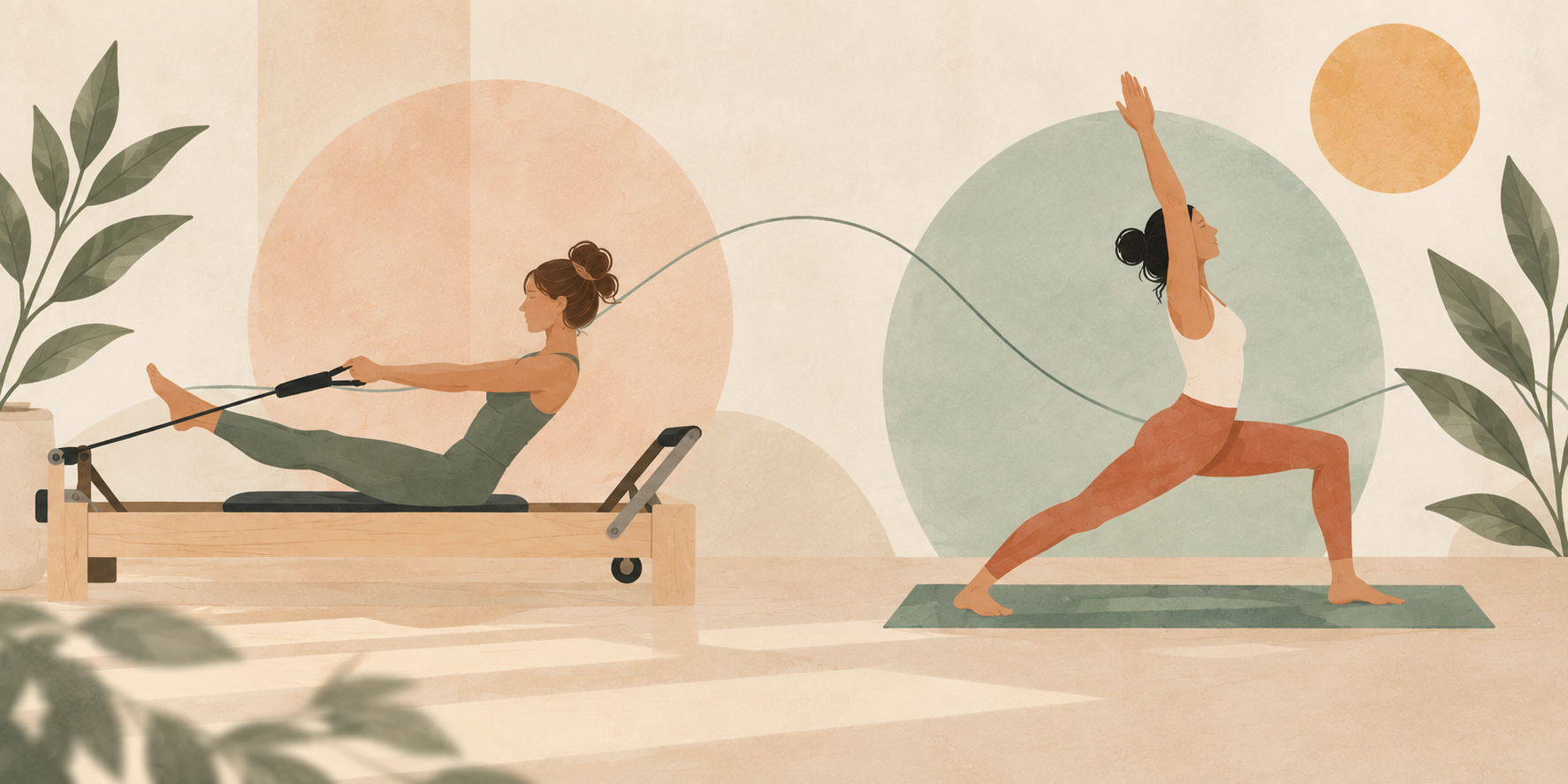
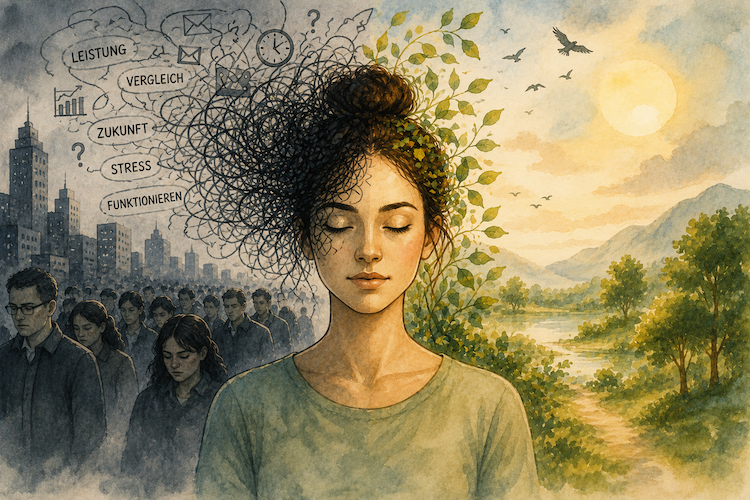
Summer is over, and with it comes the end of a phase that was easier and freer for many of us. Suddenly the calendar fills up, work picks up, obligations increase. At the same time, the days are getting shorter, the weather is grayer, and the prospect of many dark weeks can feel heavy. Maybe you know this: It seems as if everything is suddenly hitting you at the same time.
Especially during this transitional period, we realize how important it is to stay grounded within ourselves. For if we simply let ourselves be driven by external forces, we easily lose our inner balance. Yoga and yoga philosophy offer valuable tools for navigating this shift consciously—not through pressure and strain, but with gentleness, stability, and small, healing routines.
Why the transition is so demanding
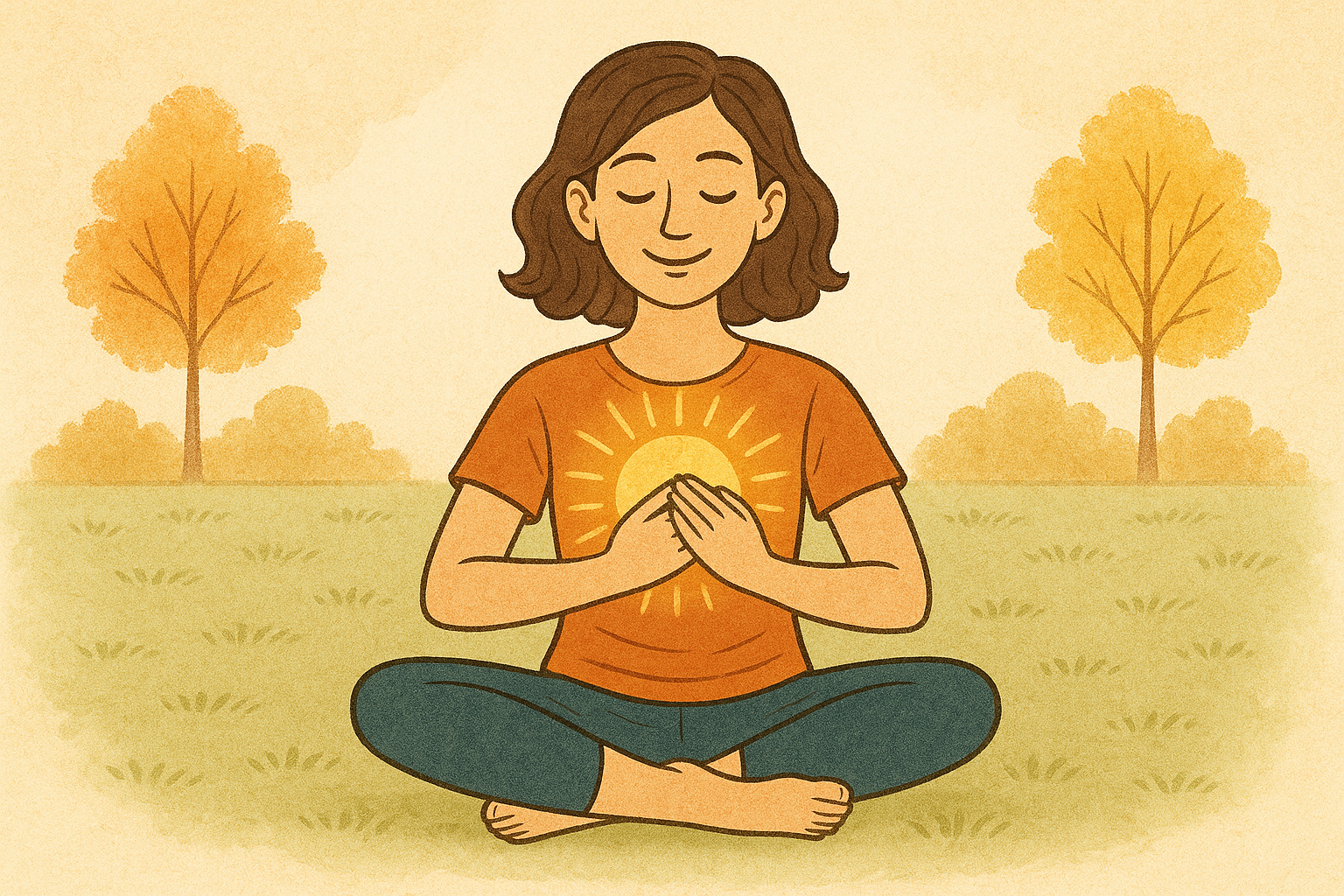
The transition from summer to autumn signifies not only an external change of seasons but also an internal adjustment. The body responds to reduced light and cooler temperatures, hormonal balance shifts, and our nervous system processes the increasing demands.
Typical accompanying symptoms are:
- Fatigue and an increased need for sleep
- Irritability or mood swings
- the feeling of being quickly overwhelmed
- a tendency to get lost in tasks and to-do lists
If we don’t pay attention to these patterns, it can easily lead to a downward spiral: we push ourselves even harder, lose our center—and end up feeling even more exhausted as a result.
Yoga philosophy as a guide
Yoga is not merely movement or a relaxation technique, but an attitude towards life. Three principles, in particular, can help us remain inwardly stable during times of transition.
AHIMSA
Gentleness with oneself
Ahimsa means “non-violence” and, in everyday life, can be translated as treating oneself with love. Instead of letting ourselves be driven by perfectionism, we can acknowledge that we are currently facing significant demands. Gentleness means taking breaks seriously, not judging ourselves for feeling tired, and respecting our own limits.
PRATYAHARA
Rückzug nach innen
Pratyahara describes the withdrawal of the senses. In a time when we are bombarded by external impressions and demands, it can be beneficial to consciously create small islands of stillness: five minutes without a phone, a brief meditation, or simply a moment to close one’s eyes and feel the breath. This practice gives us the sense that we do not constantly have to react to the outside world.
STHIRA SUKHAM ASANAM
Stability and lightness
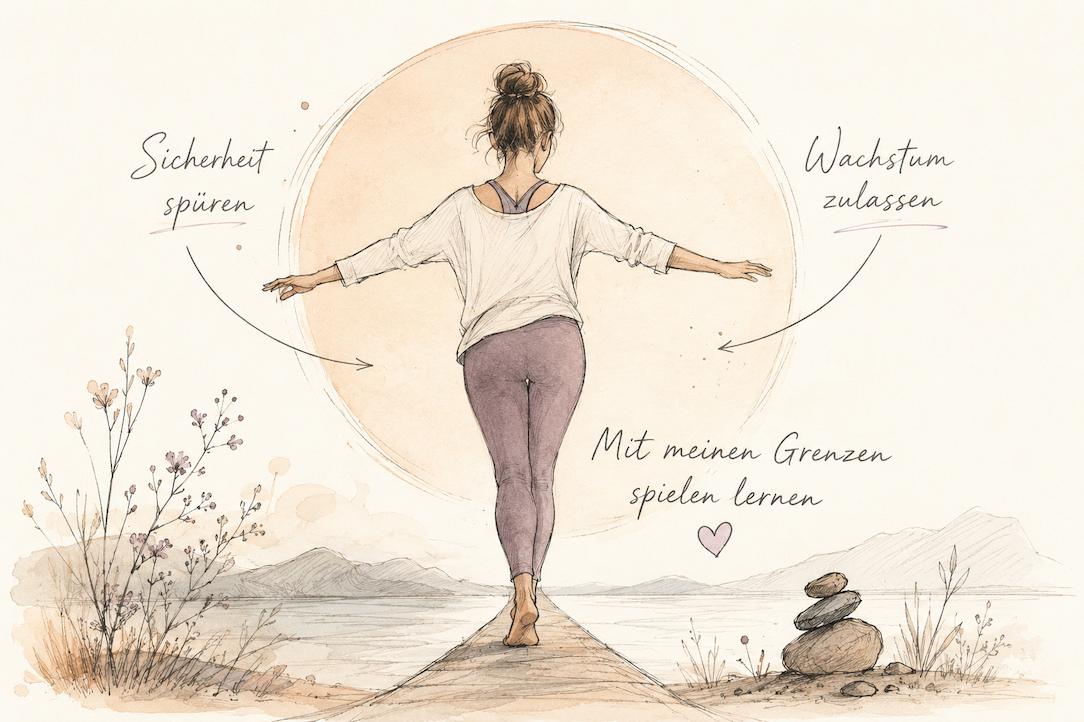
This verse from the Yoga Sutra reminds us that our inner attitude needs both: stability and flexibility. In everyday life this means: Yes, we need structure and clarity, but at the same time we can allow ourselves to take things more lightly and let them go. Only when both are in balance can true balance arise.
Therapeutic and practical approaches
How can we put these principles into practice? Here are a few concrete ideas from yoga therapy and bodywork that are particularly supportive during autumn.
1. Breathing exercises for clarity
Our breath is the most direct tool for calming the nervous system. Consciously lengthening the exhale is particularly helpful. Sit upright, inhale through your nose while counting to four, then slowly exhale through your mouth or nose while counting to six or eight. Repeat this for a few minutes.
Effect: The heartbeat slows, thoughts become organized, and the body shifts from stress mode to relaxation mode.
2. Standing poses for grounding and stability
Autumn can make us feel restless inside. Standing poses help ground us and restore our balance. Suitable examples include:
- Tadasana (mountain pose): Stand upright, feet firmly on the ground, shoulders relaxed. Feel the earth supporting you.
- Virabhadrasana I & II (warrior poses): They give strength, clarity and inner alignment. At the same time, they encourage courage to face everyday life with stability.
- Vrksasana (tree pose): Promotes balance and concentration, reminding us to be firmly rooted and flexible at the same time.
These postures not only have a strengthening effect on the body but also a powerful psychological impact: we feel more stable, more upright, and more capable of taking action.
3. Small daily routines
Sometimes it’s the little things that help us stay stable:
- Soak up morning light: Just a few minutes outdoors—ideally right after getting up—help regulate your internal clock and have an antidepressant effect.
- Take breaks seriously: Instead of powering through, consciously pause for five minutes.
- Cultivate warmth: tea, a blanket, a warm bath – the nervous system reacts positively to security.
- Gratitude practice: Write down three good things every evening. This shifts the focus away from heaviness and lack.
Conclusion: Shaping autumn consciously
The onset of autumn is an invitation to tune in more closely. Instead of simply letting ourselves be driven by tasks and the darkness, we can consciously ask ourselves: What do I need to stay grounded?
Yoga and yoga philosophy offer us clear guidance in this regard. They remind us that it is normal to feel challenged during times of transition—and that, at the same time, we always have the tools at hand to stay grounded in ourselves.
Perhaps you might like to consciously create small pockets of calm in the coming weeks: a few deep breaths, a standing pose in between tasks, a moment of gratitude. In this way, you strengthen your nervous system and remain balanced, even when external demands challenge you.
Autumn doesn’t have to be merely heavy and dark. It can also become a time of centering, stability, and inner clarity—if we allow ourselves to treat ourselves with mindfulness and love.